21/64 In Practice: Stacey Guadnola

Stacey Guadnola

Chief Philanthropy Officer | Greater Tacoma Community Foundation
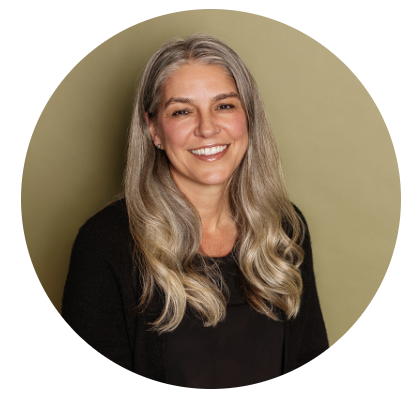
One of our favorite things about the 21/64 Certified Advisors community is watching how professionals bring 21/64 tools and frameworks to life in their own work. Every advisor brings something different: a unique context, a distinct population, a creative adaptation that none of us might have anticipated. Those moments of practice are worth sharing, and that’s exactly what this section is for.

We are honored to feature Stacey Guadnola, Chief Philanthropy Officer at Greater Tacoma Community Foundation, who brought Picture Your Leadership Legacy to a week-long leadership retreat for high school girls in Hawaii. It’s a beautiful reminder that these tools travel far beyond the philanthropy context they were designed for, and that the questions they open up are universal.

Whether you’re a longtime practitioner or still finding your footing with the tools, we hope these stories remind you of what’s possible when you trust the framework and that it inspires your practice.


21/64 In Practice: Picture Your Leadership Legacy with High School Girls

WHAT WERE YOUR PURPOSE AND OBJECTIVES?
For the past four years, I’ve had the privilege of co-facilitating the Women’s Leadership Summit, a week-long retreat in Hawaii for high school girls who have demonstrated innate leadership potential and a desire to grow. The summit immerses them in both theoretical frameworks and real-world testimony from diverse women leaders. Picture Your Leadership Legacy is one of the workshops woven into the larger curriculum. The purpose is to help these young women move beyond the words and narratives they’ve absorbed their whole lives and toward an actual, personal vision of what they want their leadership legacy to be.
 
WHAT DID YOU FACILITATE AND WHAT CHOICES DID YOU MAKE?
I used the Picture Your Legacy cards, working within the 1-2-4-All format, a Liberating Structures tool. With a group of up to 25 girls, I didn’t have enough decks for everyone to have their own set. Rather than hand out individual decks, I had the girls count off into table groups that already had cards laid out. They didn’t take card; they simply identified their cards. That distinction mattered. The images belonged to the table, not to any one person, and that created a kind of shared, exploratory energy. From there, participants journaled independently, then shared in pairs, then in table groups, before coming together as a full circle.
 
HOW DID THEY RESPOND? WHAT WENT WELL? WHAT WOULD YOU DO DIFFERENTLY?
The girls engaged deeply and authentically. One of the most memorable moments came when two girls at different tables chose the same image and used completely different language to explain why. Watching them discover that the same picture could speak to such different visions of leadership was a powerful reminder of how much meaning lives beneath the surface of an image. The format held up beautifully with a large group, and the table-based approach to card sharing actually created a productive kind of constraint: because no one “owned” a card, the focus stayed on what the image meant rather than on possessing the “right” one. If I were to refine anything, it would be building in even more time for the group table reflection. The conversations tend to run long because the material is so rich.
 
WHAT INSIGHTS OR ADVISE WOULD YOU SHARE WITH FELLOW 21/64 CERTIFIED ADVISORS?
Trust the instructions. 21/64 has done the thinking for you, and the framework is solid. Then trust yourself. Each group is different, and the facilitation needs enough space to meet the people in the room: their needs, their dynamics, their fears, their excitement. Over five years with this group, I’ve learned that the exercise is never the same twice, even when the script is. The images do the work. Your job is to hold the space, stay curious, and let the conversation go where it needs to go. If you’ve been hesitant to try Picture Your Leadership Legacy outside of a philanthropy or wealth-planning context, I’d encourage you to experiment. The tool translates beautifully to any setting where people are exploring how they want to show up in the world.