
We are honored to share the release of a report marking twenty years of next gen donor engagement through 21/64’s Grand Street program. The first longitudinal research of its kind, this impact report highlights the transformative power of engaging next gen donors early, fostering agency, independence, and leadership.
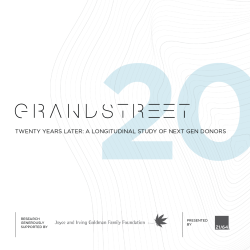
Since our founding in 2003 as a program under the Andrea and Charles Bronfman Philanthropies, and our transition to an independent nonprofit in 2015, 21/64 was one of the first to recognize the growing influence and potential of younger generations—Gen X and Millennials—at a time when philanthropy was primarily led by Traditionalists and Baby Boomers. Through the Grand Street program and next gen work, 21/64 remains committed to empowering next gen donors with the tools and confidence to navigate their philanthropic roles, making a lasting impact in communities with which they’re involved.
The report includes first-person quotes and stories from donors, and strategies for engaging this critical group. The success of Grand Street has given rise to other significant next gen donor programs and initiatives in the sector and helped inspire philanthropic learning journeys across the globe.
Acknowledgements
Grand Street would not have been possible without the Andrea and Charles Bronfman Philanthropies whose investment secured many years of Grand Street and other next gen programs run by 21/64.
Thanks to the Joyce and Irving Goldman Family Foundation, who stepped in to support Grand Street in a significant way after ACBP sunset, and to their next gen family member Joya Sonnenfeldt whose leadership helped make this report possible.
We are grateful to the Grand Street members who participated in twenty years of growing and giving and especially to those whose contributions of time, talent, treasure, and ties informed this research and our ability to continue to serve in the field. Your willingness to show up, to learn, to stretch, and then to act continues to inspire.
Lastly and as always, thanks to Michael Moody for his research expertise and thought leadership collaboration, as well as to Evelyn Van DeMark and Naaila Hudani, whose coding, analysis, and evaluation skills kept us honest.